
Whose streets?
Boston's reversal on safe streets projects is a moment for grassroots pushback

Dear Walking City Trails friends,
Normally this newsletter is a space in which I spotlight cool stuff going down in the Greater Boston outdoors scene, like Night Hikes (more on that next week :) and DIY green space stewardship projects such as the upcoming Nira Rock tree planting that’s happening this Saturday May 9th at 10:00 AM. (Click here to sign up!) But this week, we need to talk about something strange—in a bad way—that’s happening in Boston.
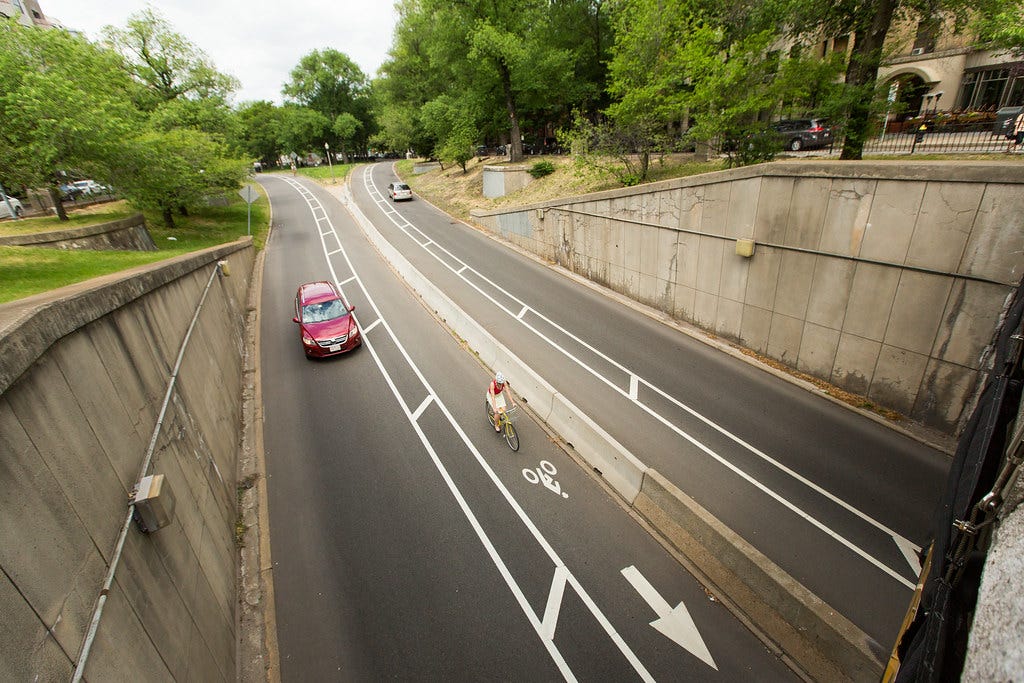
Those of you who’ve spent any time walking, biking, or driving around Boston know that our roads are historically, notoriously dangerous. In his book The Lost Continent, Bill Bryson described Boston’s roads as “clearly designed by a person who had spent his childhood crashing toy trains.” And yet, the labyrinthine nature of our roads isn’t enough to stop some drivers from treating them like training grounds for stuntwork in the Mad Max films. The recent rise of incidents in which drivers have hit walkers and cyclists with their cars in Boston, combined with new cars becoming bigger and deadlier, spurred Mayor Michelle Wu and her first administration to prioritize street safety projects. These interventions have included protected lanes for cyclists, speed humps on residential streets, dedicated bus lanes, and even some multimodal redesign plans for busier streets like the stretch of Commonwealth Avenue in Allston that runs from Packard’s Corner to Warren/Streets. The intention behind these projects was to make the streets of Boston safer for all users, as opposed to sticking with the lopsided status quo that places automotive convenience over the lives of pedestrians and bikers.
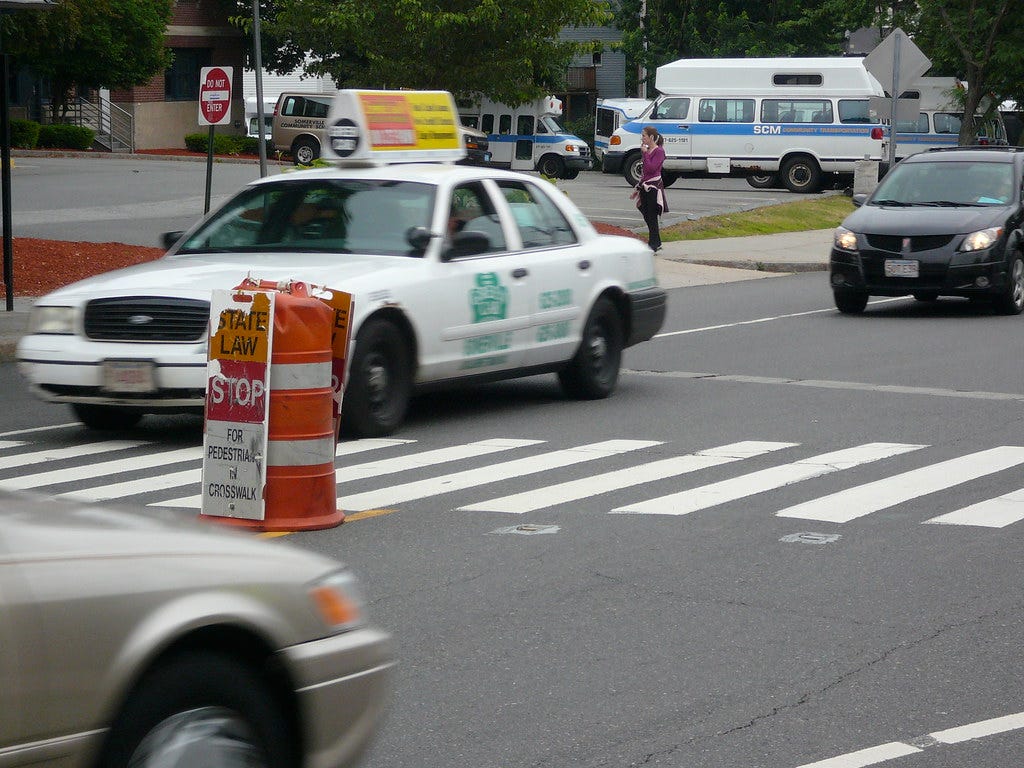
Naturally, the Walking City Trails crew has supported these safe streets interventions, given that exploring the City of Boston on foot is riskier than it should be when busier streets need to be crossed. During Mayor Wu’s first term, the city took some big steps in this new direction; enough that the re-shaping of some well-traveled Boston streets sparked a backlash from drivers and some businesses. Bike lanes, in particular, turned into a headline issue in last year’s mayoral primary between Wu and Josh Kraft. While the mayor won the primary and a second term, the current Wu administration’s stance on safe streets projects is quite different from what it looked like just a few years ago.
As reported by Christian MilNeil for StreetsblogMASS (a great publication which has been covering this development extensively), Mayor Wu’s new budget for the City of Boston has eliminated a staggering amount of the safe streets projects from the city’s five year plan. This across-the-board freeze on street projects was preceded by some troubling signs, like the departure of former Boston Chief of Streets Jascha Franklin-Hodge. Morale in the streets department since then has been flatlining, according to The Boston Globe and also a few folks I know within the administration. And so far, Mayor Wu has chalked up the project delays to an intention to build more consensus in neighborhoods that are slated for new street safety projects, as reported by WBUR.
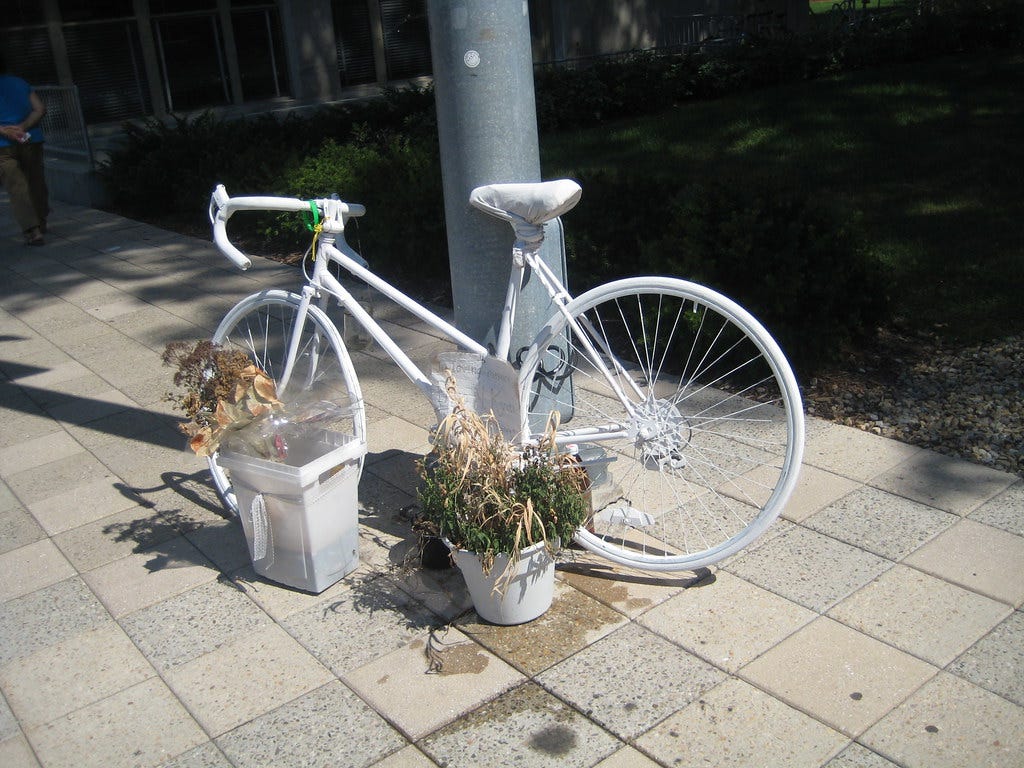
The problem is threefold. There has long been a growing consensus among Boston residents that these interventions are needed. And in every city where they have been implemented successfully (such as Montreal, now renowned for its bike lane network), the changes were initally met with some pushback. But perhaps the most concerning part of the problem is the fact that getting Boston’s safe streets projects finished is partially contingent on time-sensitive federal funding. And in the face of the new and widening project delays, we have already lost $8.15 million that would have funded a re-design of a lethal intersection near Fenway—on the Walking City Trail!—where a cyclist, Paula Sharaga, was struck and killed by a cement truck back in 2022. A white “ghost bike,” painted and installed in her memory, still sits by the intersection today.
There are theories abound as to why Michelle Wu, who initially ran for the mayor’s office as a multi-modal transit advocate, has made such a sharp pivot on one of her signature issues—even as cities like New York continue in the direction of making their streets safer. But the reason why I’m using the Walking City Trail newsletter to highlight this mystifying and distressing turn of events is because Boston residents and visitors still have the power to advocate for resuming the stalled street projects. And that’s what this moment calls for. Urgent grassroots action from the street level.
If you support safe street projects in Boston, here are three things you can do today:
#1: Contact Mayor Wu’s office to express your support for reviving the projects in a timely manner and, if you’re frustrated, to express that as well. (Click here to do so.)
#2: Contact your Boston City Councilor to express your support for getting the safe streets projects started again ASAP. (Click here to find and/or contact your councilor.)
#3: If you use Instagram or Bluesky, post your thoughts about the project freeze, and tag Mayor Wu in your posts. Only a small handful of Boston elected officials still use Twitter these days; otherwise I would suggest posting your comments there as well.
Lastly, I would like make it clear that this newsletter is not meant to be a commentary on the broader successes and failures of the last Wu administration or the current one. When projects that align with the WCT mission are realized, the policy decisions are celebrated. And in cases like this, when policy decisions jeopardize the lives of Boston residents and visitors who are out in the city on foot, on bikes, and yes, in cars as well, the natural response is to tell policymakers, “Hey. This is bad. You shouldn’t do this.”
With our raised voices, this bizarre turn-of-events with Boston’s safe streets projects could ultimately be a moment of losing sight of a trail that leads to something good.
In solidarity,
Miles Howard
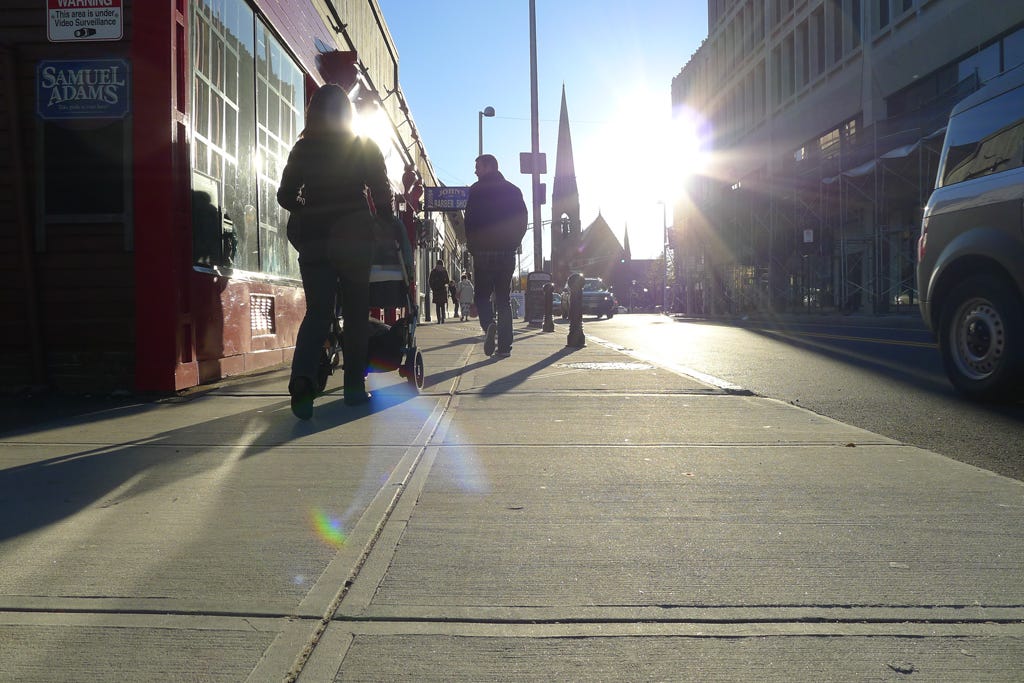
The Walking City Trails are 100% community supported. Simply put, these urban trails would not exist without the enthusiasm and generosity of Boston explorers like you. If you would like to support our efforts to connect more people with the great *local* outdoors, CLICK HERE.
Thanks for the nudge! I just wrote to the Mayor and my Councilor Durkan!
You certainly are insistent… not even persistent. While I can only speak for myself here in JP, the very idea that between 11-13 speed bumps were placed on Allandale Road where Boston’s last garden center and farm is. That was so unbelievably pathetic that I am glad in only got to read about it.
And the painting of the lines on Center Street rotary with no signs in place to let drivers know about it could have caused accidents for both two wheels and four wheel. This nonsense leads me believe that Mayor Wu has never driven around here and she’s one neighborhood away in Roslindale. What blatant disregard for the auto drivers! I don’t think she has a drivers license and I am not being sarcastic…I’m serious. One or two signs would have been nice.
You are just a bunch of crybabies! It’s obvious that your parents never taught you how to cross the street!